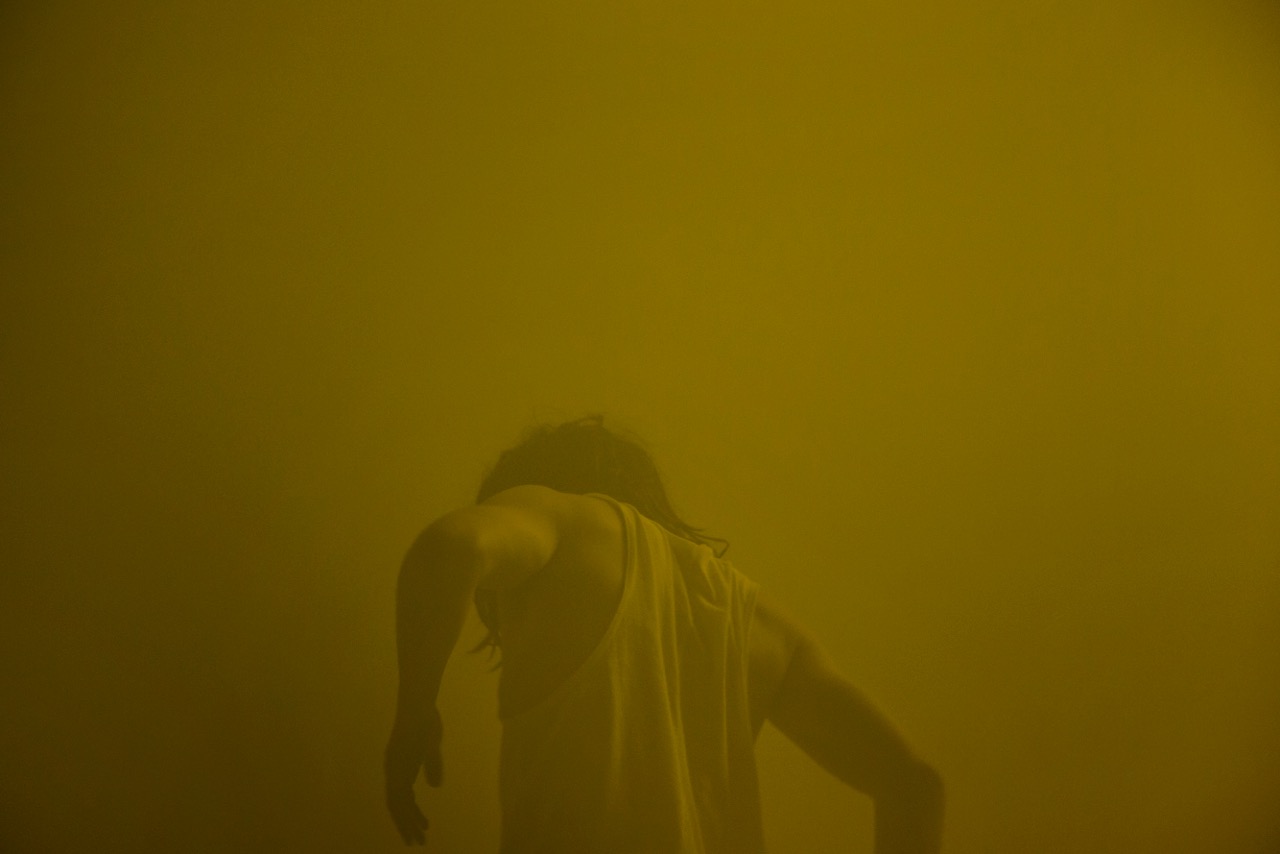
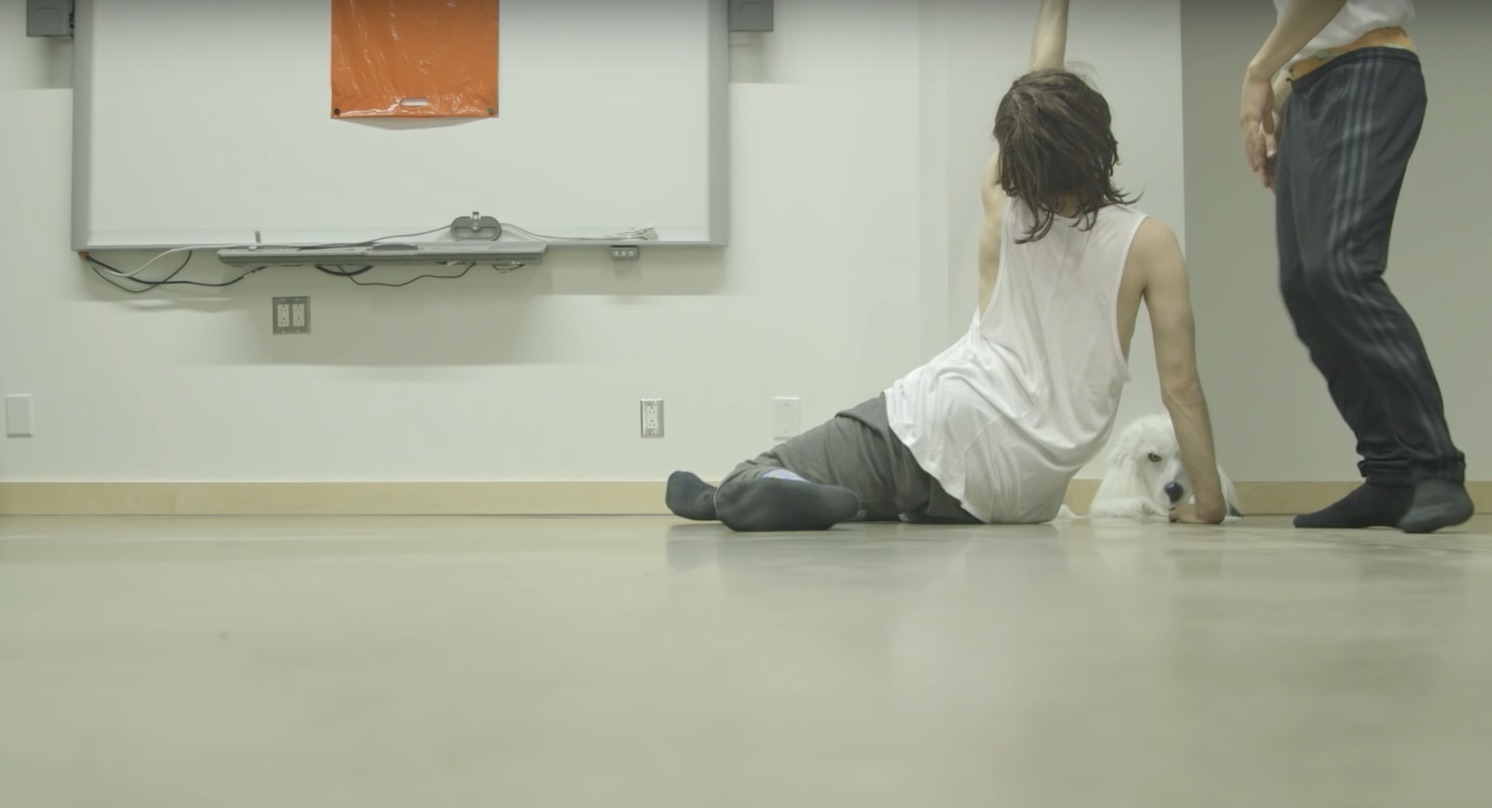
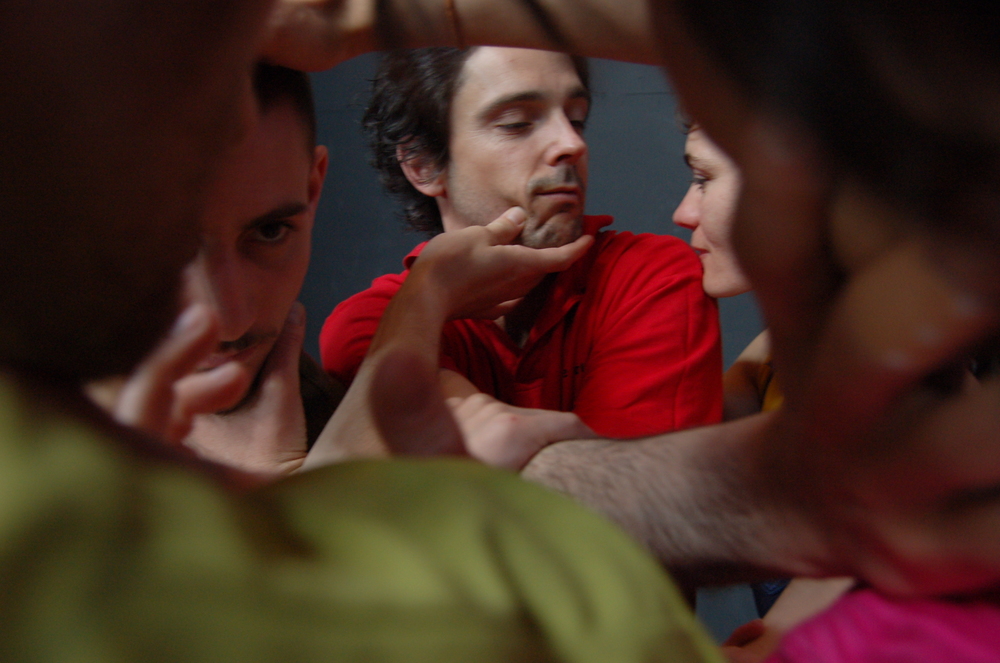
- Title: SPANGING THE BERG
- Year: 2011
- Date: 1.1.2011
- Duration: 11 Minutes
- Choreography: Cyril baldy & Tilman O'Donnell
- Performance: Cyril baldy & Tilman O'Donnell
- Editing: Cyril Baldy
- Video: Cyril Baldy & Tilman O’Donnell
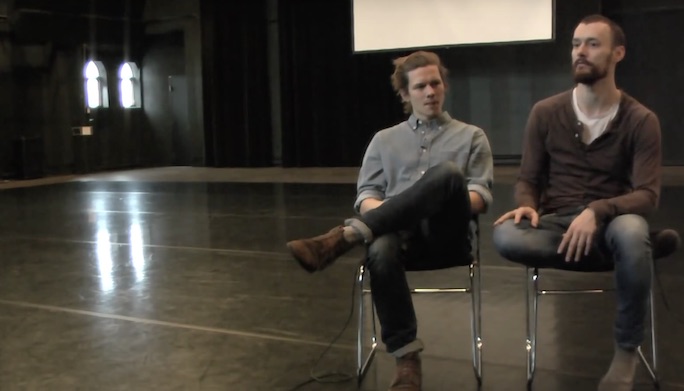
The following is an interview between Tilman O’Donnell and Cyril Baldy.
Tilman: Hi Cyril.
Cyril: Hi.
Tilman: I wanted to ask you some questions about something you like to call “SpangingTheBerg“.
Cyril: Sure.
Tilman: Okay, so can you tell me when you came up with the term?
Cyril: It started when I read Mårten Spångberg’s book, the one that he wrote a while ago, called Spångberianism or something like that and, while reading it, I started to realize that the guy was just spouting lots of criticism, kind of directed any which way. In all different directions. By the way, just for the record, I like the book. It’s Rock n’ Roll.
Tilman: Right, ok. For the record, that’s noted. Um, do you remember where you got the book?
Cyril: Don’t remember exactly. I think it was just laying there on the ground.
Tilman: Laying where?
Cyril: On the floor of the studio where I work [The Forsythe Company] I guess the book was waiting for me..
Tilman: Oh yeah, weren’t there like, 25 copies lying around the studio?
Cyril: Yeah, that’s right. In any case, I had nothing better to do than to start reading the book.
Tilman: One of those days.
Cyril: Yep. So like I said earlier I realized that he [Mårten] was kind of putting everything into perspective. To put it nicely, but without really giving any answers to anything he was, excuse my French, shitting on things.
Tilman: So you felt that he was criticizing certain tendencies in dance and theater and art without really proposing any solutions? Is it fair to say that that was your feeling?
Cyril: Yeah ! That was my impression. He was just criticizing for the sake of criticizing.
Tilman: Uh huh.
Cyril: I was amazed, cause he did it really well. The dude can write..
Tilman: I remember your enthusiasm at that time. I also remember kind of digging it. Feeling sort of alienated by the text but also noticing how great of a reductionist he could be. I also remember the book being used for all kinds of things in the studio. Some people were reading it, and other people were using it to prop up their head while doing Pilates exercises.
Cyril: Nice..
Tilman: And it was used as a coffee holder too. It’s function was sort of open, in other words. Since there were so many copies floating around the studio, it got used in so many different ways.
Cyril: I made the book fart in several performances..
Tilman: That’s right! I remember you brought it on stage and used it for a scene in one of the pieces. But anyway, so you read it, and then what happened?
Cyril: Well since the book was mainly describing how uninteresting the rest of the world was for him, and since he wasn’t proposing any solutions to make “the rest” more appealing, I sort of reached the conclusion that he was basically touching himself, behind his own words.
Tilman: …..
Cyril: That’s how I thought up the name “SpangingTheBerg“..
Tilman: Can you explain what you mean by “touching himself behind his own words”? Do you mean like he was wanking himself?
Cyril: Yes, masturbating. But in great way. However strange that may sound..because the only thing going on in that book was pointing at other people.
Tilman: So you mean he seemed to get pleasure from that? A means, perhaps without an end. Is that correct?
Cyril: Well, I guess what I mean is that there was no reflection on himself. It felt like he was not putting himself in perspective.
Tilman: Right. I see. He wasn’t implicating himself all that much in the book.
Cyril: Nope, no self-criticism.
Tilman So what did that impression do for/to you, in the context of your work?
Cyril: Well, this aspect of zero self-criticism was really amazing to start to experience and deal with physically. I mostly hang out with artists who are, generally, always asking themselves if the path they are following is the right one or not. In other words, involved in self-critique. So then I thought, since I/we work with improvisation, that it was a perfect way to actually start dealing with this notion of zero self-criticism in motion.
Tilman: Uh huh.
Cyril: Just to throw ideas in the air and see what happens. Whatever! As long as you have belief.
Tilman: “Belief”?
Cyril: Yeah, whatever the whatever is that you do, you just totally believe in it.
Tilman: So, do you mean it as a kind of physical action that you take, with total, unequivocal belief, and the absence of self-reflection, self-criticism, or any care for composition/time/space etc etc. and all that stuff that tends to be part of a “proper” improvisation structure?
Cyril: Very nice yes! The moment where there is the absence of self-criticism is quite nice to experience and gives you an opening to a whole bunch of new physical opportunities. The thing that is derived from the book is that critique of anything and everything without solution translated itself for me into suggestions, physical suggestions, and from that point on, I don’t try to answer any of it, or provide pretty or “proper” solutions. It’s just that action at that point.
Tilman: Right.
Cyril: Another question I had at the time was: Can one move without making any reference to anything at all? So with the “SpangingTheBerg” technique, one can throw any idea/gesture/move out there and just hope for the best. Maybe answer that question. Maybe not.
Tilman: Or maybe you don’t even hope for the best? Just throw something into the mix.
Cyril: Sure.
Tilman: At that point you and I were colleagues, seeing each other everyday, working in the context of improvisation structures that require a good deal of “responsibility” to certain modes of organization. I won’t get into what they are. But I remember the introduction of “SpangingTheBerg” felt quite, I hesitate to use the word but, liberating…
Cyril: Yep.
Tilman: ..and I like how you just called “SpangingTheBerg” a “technique”. That’s excellent! Did you just happen upon that in the course of our conversation? I haven’t heard you refer to it that way before.
Cyril: I guess it just happened.
Tilman: I’ve heard you refer to it as a revolution..
Cyril Baldy: Hell yeah!
Tilman: Ok, so how have you kept working on SpangingTheBerg since that original “ah ha!” moment? Has it become part of performances?
Cyril: Yes. More or less. You know I work for someone, so it is always difficult to negotiate a compromise. But I see how it has influenced my work, how it opened some doors, and gave me courage to do whatever came up, using absolute belief or conviction.
Tilman: Uh huh.
Cyril: I like that: “Whatever with Belief“. Cause at the end that’s what SpangingTheBerg is about. It is belief, in whatever is happening, whatever you’re doing. And in the right circumstances, people will scream “Hooray to the Revolutionary moves!”
Tilman: Right.
Cyril: See what I mean !?
Tilman: I think so. Hooray for the revolutionary dance moves! Right. So those dance moves have potential to happen at any given moment, using absolute belief as the driving force, without preemptively considering/dealing with consequences?
Cyril: Sure..
Tilman: Huh. I wonder about SpangingTheBerg training? One can be really obsessed with dance techniques, expertise, craftsmanship etc. “SpangingTheBerg” is something that can’t quite be called taught in that kind of progressive means toward and end sort of way. At least not yet. I can’t really imagine a SpangingTheBerg Institute. Can you?
Cyril: Well..
Tilman: Wait that leads me to my next question: Is there a way of knowing when “SpangingTheBerg” is happening? Is it identifiable?
Cyril: Oh Yes ! It happens when you see something great happening before your eyes. It happens in the largest way possible, and of course in the smallest way possible. As I said it happens anywhere when “Whatever” is happening with “Belief”. Interest starts to happen.
Tilman: So to sumerize: Whatever+Belief= SpaningTheBerg?
Cyril: For today ! Absolutely !
Tilman: You started to develop this in the context of improvisation structures that can be quite formal. It seems that SpangingTheBerg was developed in relationship, negation even, to a given set of formal rules, while still affirming a participation in them and at the same time an explorative sense in your body. I’ve seen you SpangingTheBerg in the midst of very formal performance settings. I guess I like that it can co-exist with formality. That’s part of it’s “whateverness“, that it shows up anywhere.
Cyril: Yes.
Tilman: Essentially, it feels like you kind of give yourself permission to graciously (or not) just say fuck it and get going with something-or-other. Which, again, is a delicate negotiation with certain elements of the structures we’ve been working with.
Cyril: Sure.
Tilman: Mårten’s text most likely had an express intention, and whatever that may have been, his mode of writing kick-started a series of events and insights in your body, which translated into an approach/orientation to the experience of moving. In turn, through this conversation, it turns back into text, which is then published (albeit externally) in The Swedish Dance History. I like the circular aspect of text/thought/orientation/action/text.
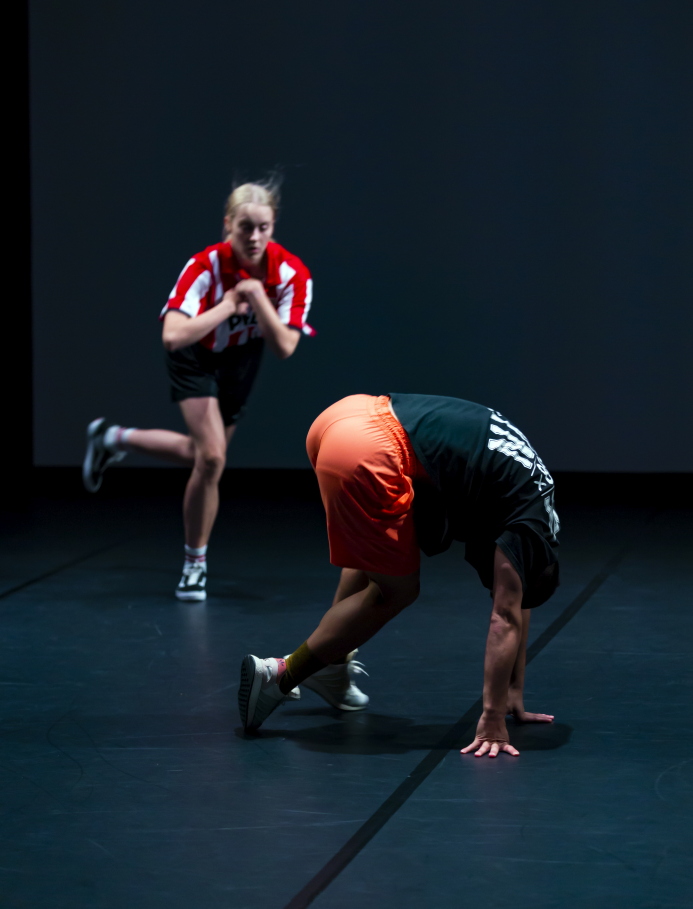
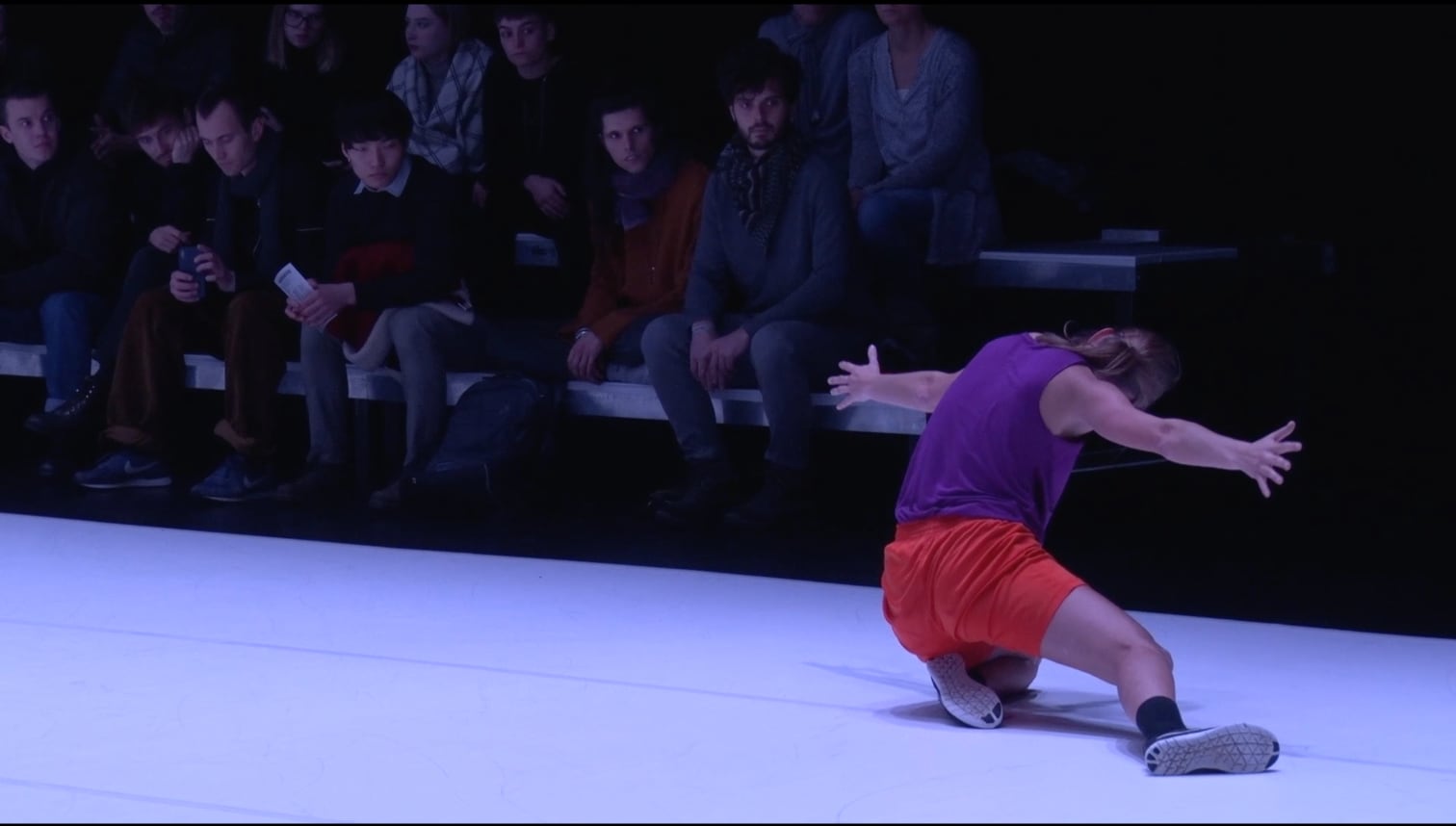
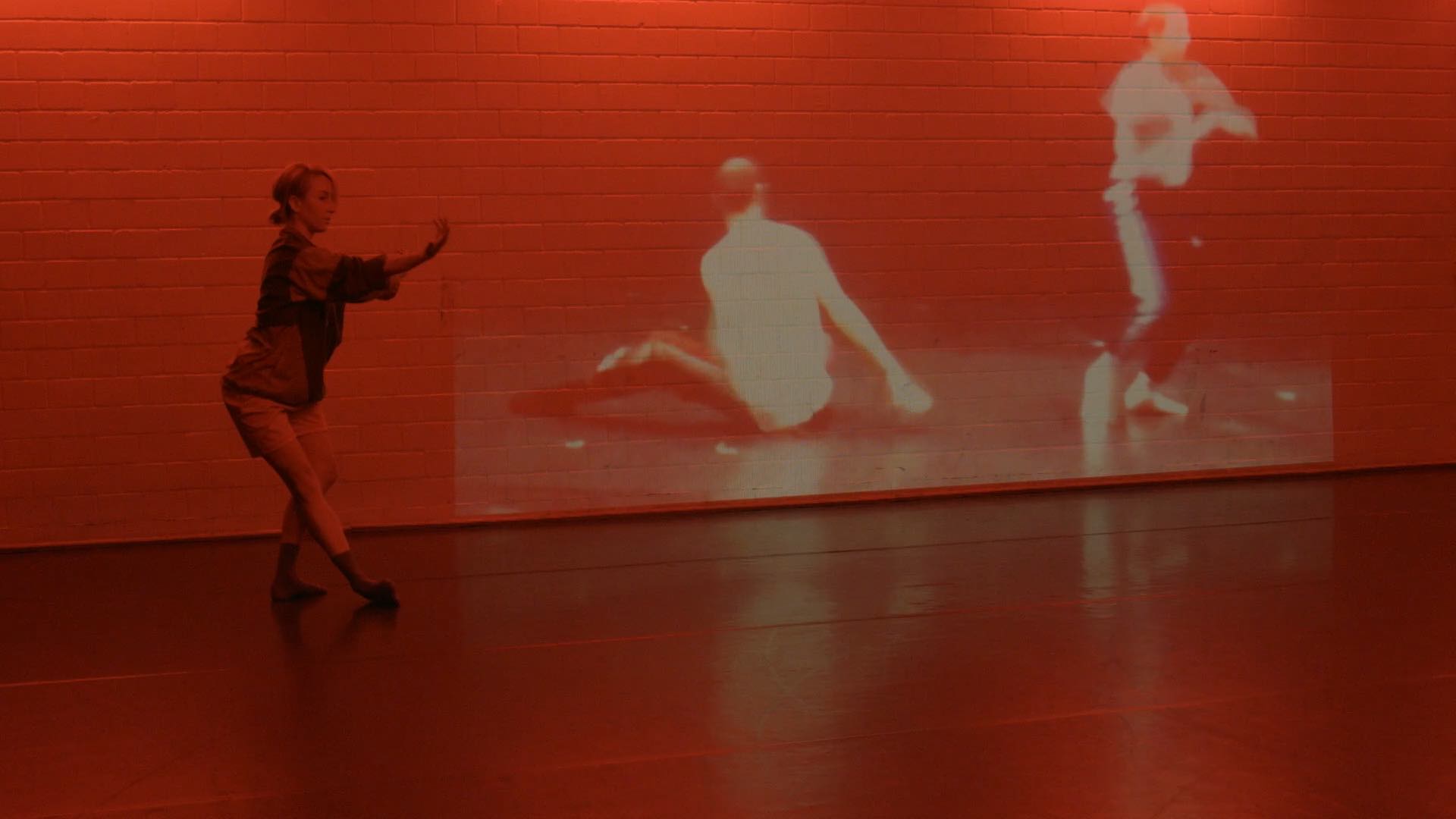
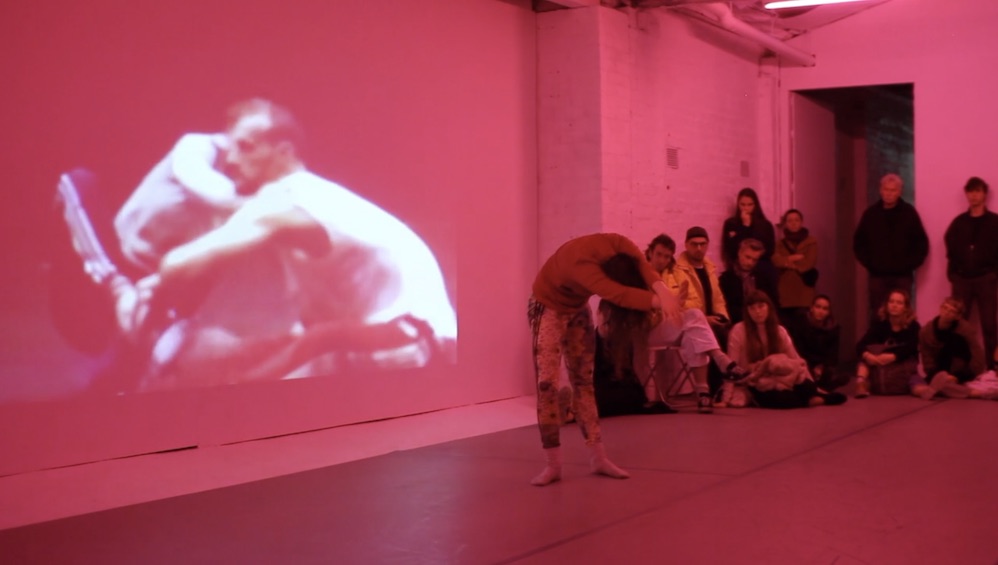
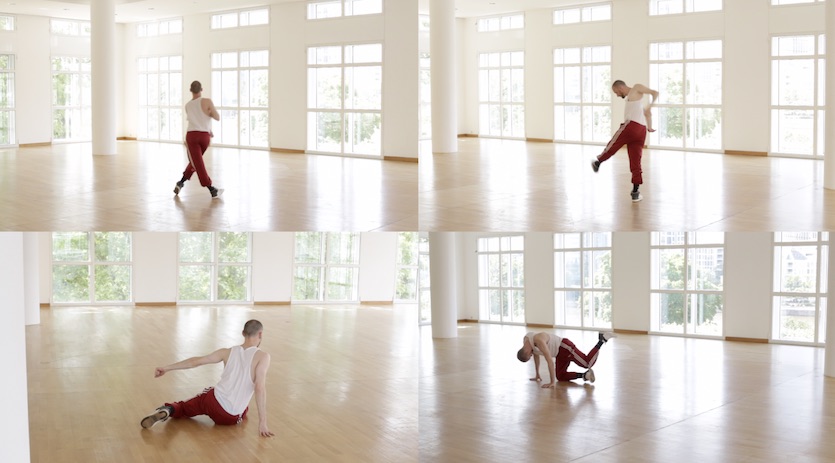
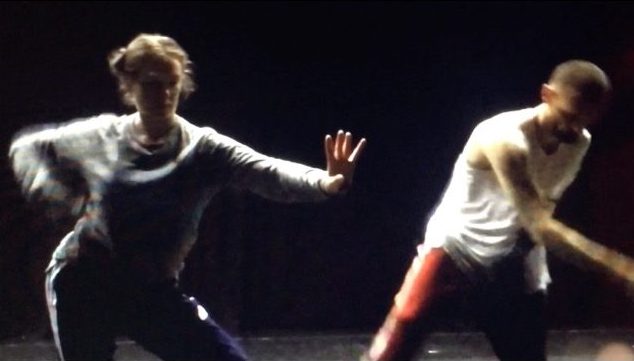
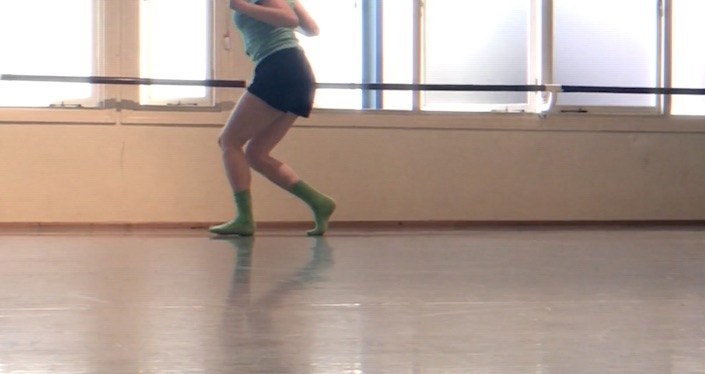
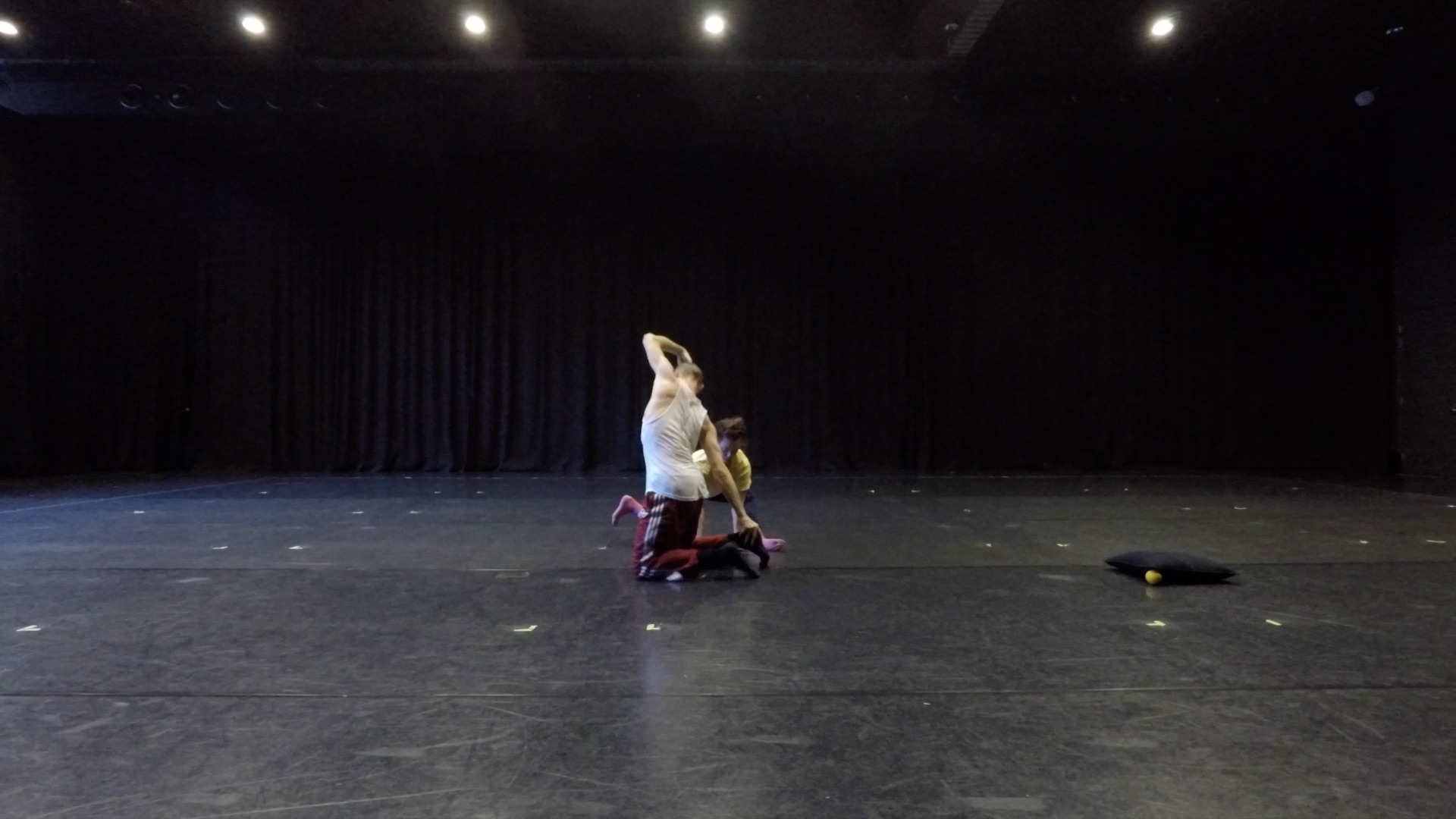
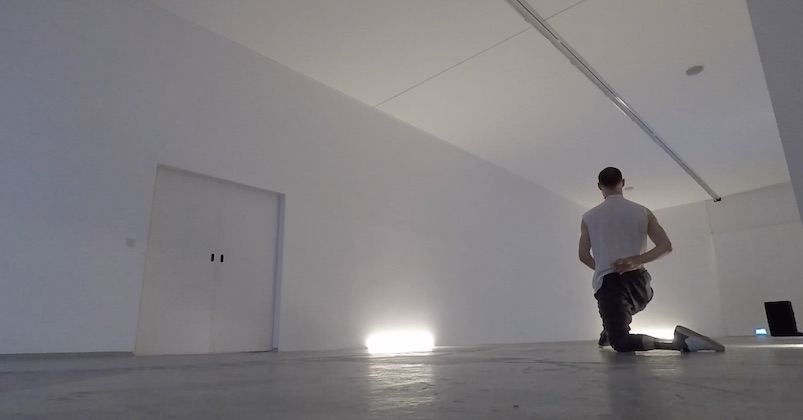
Cyril: Yeah sure. Ok. So we have a couple short videos, a few examples of the state of SpangingTheBerg as it stands today.
Tilman: They are samples of what SpangingTheBerg has become in the context of our work together at The Forsythe Company.
Cyril: Uh huh.
Tilman: But we sort of agreed that, of course, SpangingTheBerg can look like, or not look like, do or not do, anything. So that it is kind of a call to people to do whatever with belief, their way, in the context of their work.
Cyril: …
Tilman: Is that fair to say?
Cyril: Yep. Whatever. The Revolution Has Started.
Tilman: Ok.
Cyril: In relationship to …
Tilman: Whatever?
Cyril: Yes. WHATEVER.
Tilman: Great. So. Whatever…
Cyril: Whatever.
Tilman: Thanks for chatting with me.
Cyril Baldy: Whatever..